AmanMemilih

What if a national vote recapitulation workflow could be altered by one weak admin credential or a man-in-the-middle attack? That question stopped feeling theoretical during the 2024 Indonesian general election cycle. Our team kept seeing the same pattern in the field: data that did not line up, heavy reliance on centralized control, and trust that lived in people instead of verifiable systems.
AmanMemilih started as our semester project at Telkom University and grew into a civic-tech stack we still talk about with pride. The idea is simple to say and hard to build: make vote recapitulation transparent, tamper-resistant, and easier for operators who are under pressure at the TPS. We were not trying to replace the entire electoral system overnight. We wanted a reference architecture that showed how Web3, blockchain, and distributed storage could answer a very specific fear: that recap data could be changed after the fact without anyone noticing.
That meant immutable anchors on chain where it mattered, IPFS for files that should not live on a single VPS, and product flows that do not assume the admin panel is always honest. It also meant designing for real users, not a hackathon demo. Operators need speed. Supervisors need audit trails. Citizens need a reason to believe the number they see is the number that was reported.
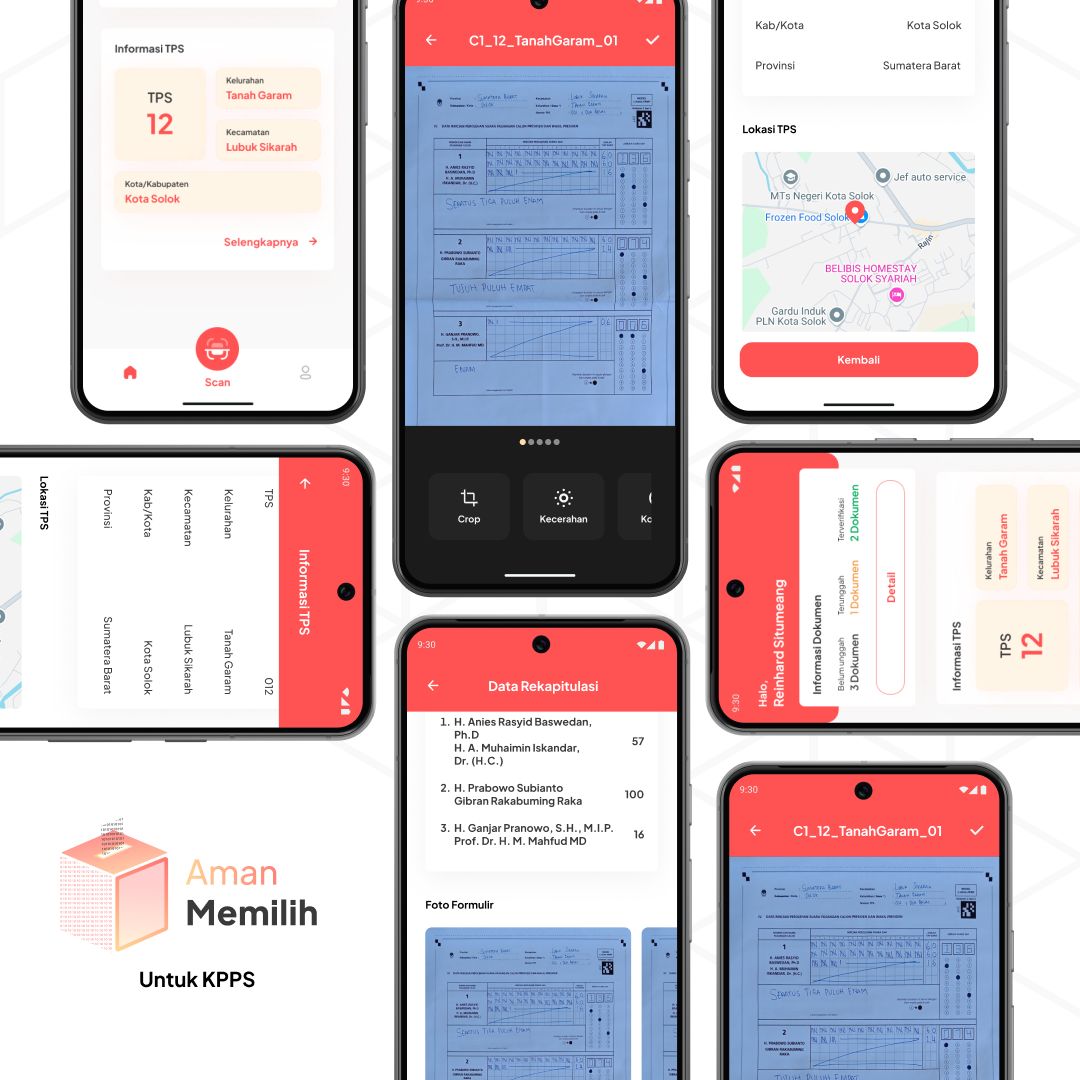
Behind the dashboard we split responsibilities the way you would on a product that has to survive maintenance. Flutter handles the operator path on the ground. Go and Express back the APIs and integration points. Docker ties environments together so a new contributor is not guessing which port is which. When we argued about security, it was never abstract. We asked what happens if credentials leak, if traffic is intercepted, if someone tries to rewrite a submission after midnight. Those questions shaped both the schema and the UI copy.

We studied how Sirekap-style workflows behave in the real world, not only on slides. Deadlines, partial connectivity, and the stress of reporting upward all show up in small UX decisions: where confirmation lives, how errors read, what happens when a sync fails and the operator is still standing in front of angry witnesses. Good civic tech is boring in the right places. The exciting part should be that the data survives scrutiny, not that the button glows.
On the engineering side I spent a lot of time aligning what the mobile and web clients promised with what the APIs could prove. That included recap payloads, status transitions, and the hooks we needed so a supervisor could reconstruct a story later. Aaron pushed on trust through design: visual cues, feedback loops, and flows that make tampering feel harder because the system expects verification, not blind faith. Wildan, Yazid, and Rifqi rounded out implementation and integration work so we were not a single-repo semester throwaway.
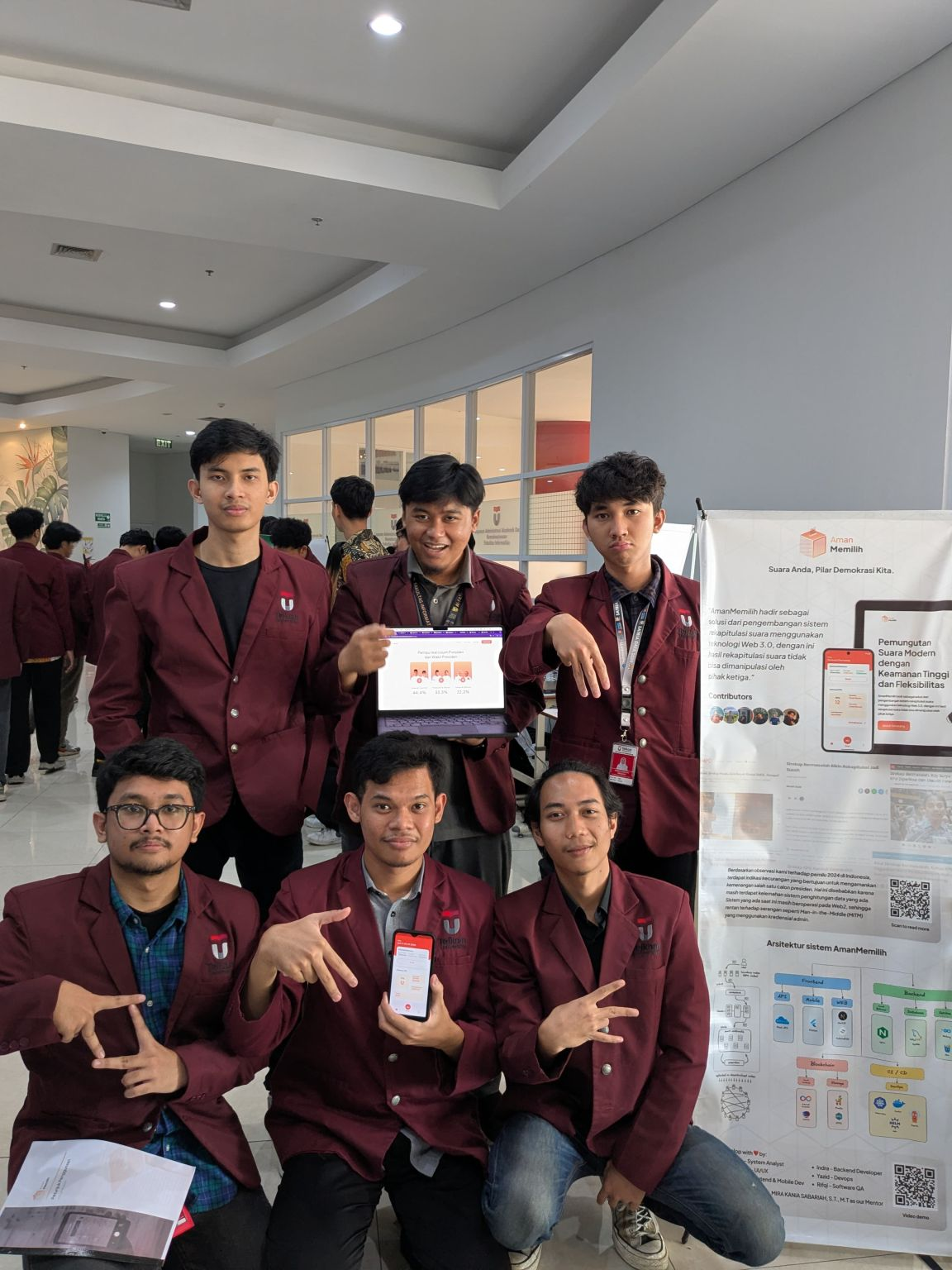
You can follow the code in the open at github.com/amanmemilih: amanmemilih-nextjs, amanmemilih-flutter, go-amanmemilih, amanmemilih-express-api, and amanmemilih-docker. Forks and stars are nice. What matters more is a coherent multi-repo story you can actually trace, not a single README and a prayer.
AmanMemilih is more than a campus prototype. It is a civic-tech bet that election integrity deserves infrastructure you can verify. Your vote should rest on democratic pillars you can inspect, not luck. We kept building after the semester ended because that bet still feels worth making.