Nara Wallet

The Nextgen Agents Hackathon asked a sharp question: what if autonomous AI agents did not stop at a Python notebook, but shipped on decentralized infrastructure end to end? Organized around Fetch.ai's uAgent framework and the Internet Computer, the competition pushed teams to deploy agents on Agentverse, wire them to ICP backend canisters, and prove the system could run without a traditional server babysitting every decision. Deliverables were not slides. You needed a functional agent, a live integration, and the nerve to demo it online between August 1 and August 23, 2025.
We entered as a full team (solo builders were not eligible) and built Nara Wallet: a wallet experience where agent logic and on-chain state meet in one story. The product site runs on ICP at vhtak-4yaaa-aaaam-aejya-cai.icp0.io. Behind it is the hackathon stack in practice: uAgents on Agentverse talking to canisters that hold the rules we care about, mentorship from Fetch.ai and ICP DevRels when we hit integration walls, and a deadline that forced us to cut scope like adults instead of dreaming forever.
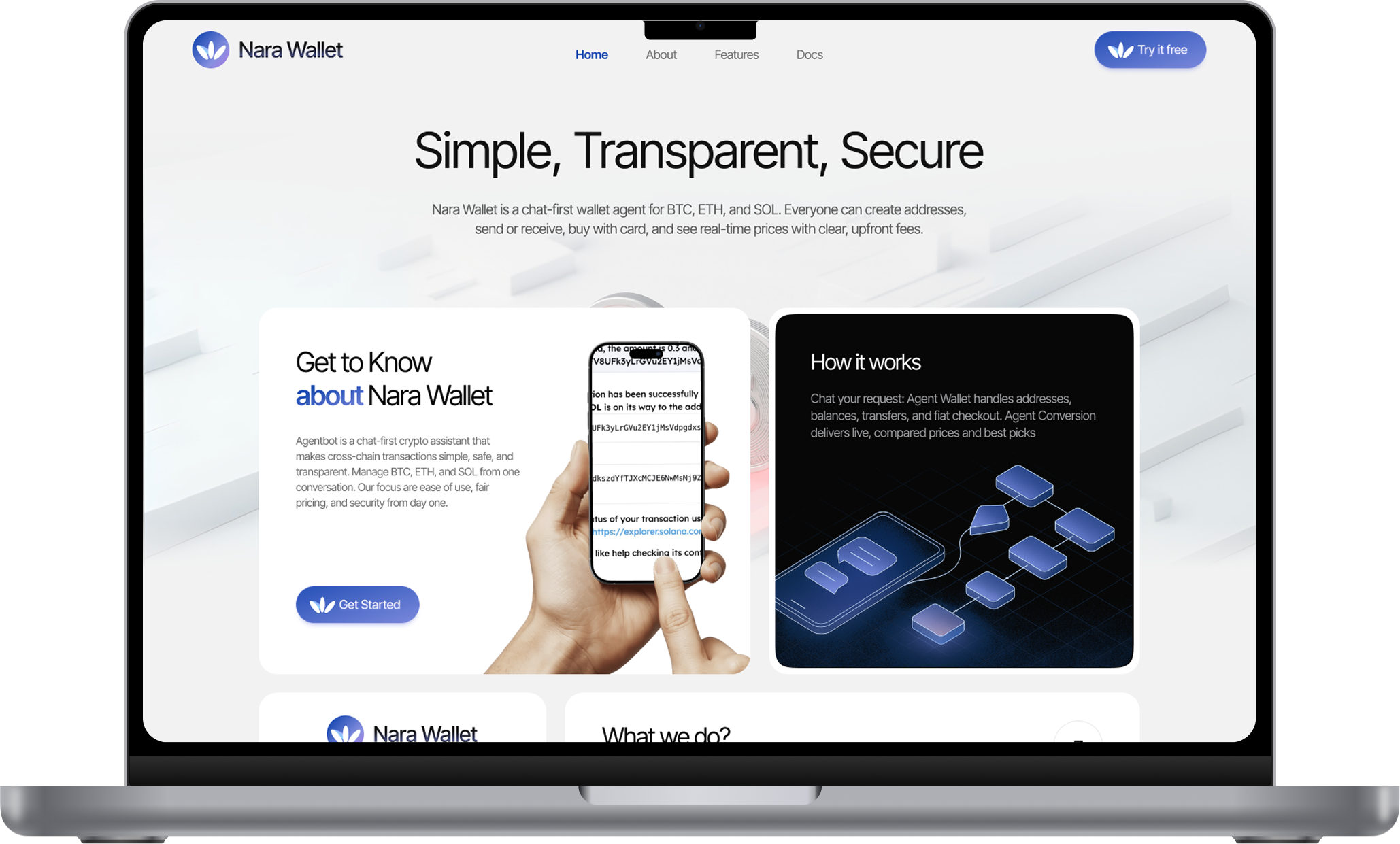
Technically we lived in two worlds at once. Fetch.ai's uAgent model expects agents that can discover, message, and act with autonomy. ICP expects you to think in canisters, upgrades, and candid interfaces that survive mainnet nerves. Nara Wallet sits at the intersection: agent orchestration on Agentverse, persistence and authorization patterns on canisters, and a frontend that explains what happened without forcing users to read Rust or Python logs.
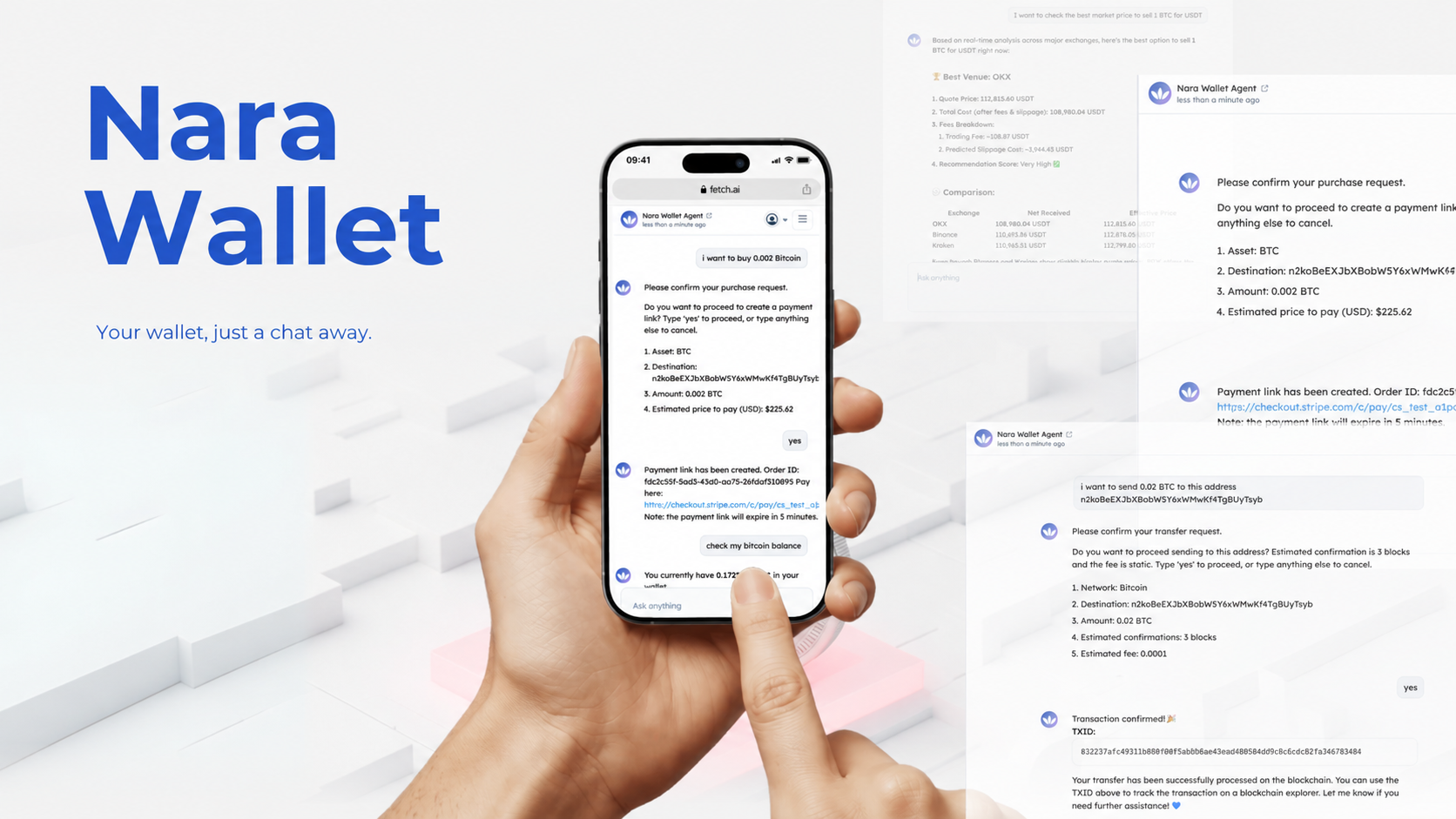
The prize table was real money for a short sprint: $2,500 for first place, $1,500 for second, $1,000 for third, out of a $5,000 pool, with top teams advancing toward WCHL 2025 and a much larger regional prize pool. We finished first. That result mattered because it validated the architecture under pressure, not because a single metric moved on a dashboard. Winners were announced August 31, 2025, with a path into the WCHL25 regional round in September.
Nara Wallet is hackathon execution under real constraints: team-only entry, dual-stack integration across Fetch.ai and ICP, a public demo URL, pitch deck, video, and a first-place finish with a path into WCHL. Decentralized intelligence as a deliverable, not a tweet thread.